
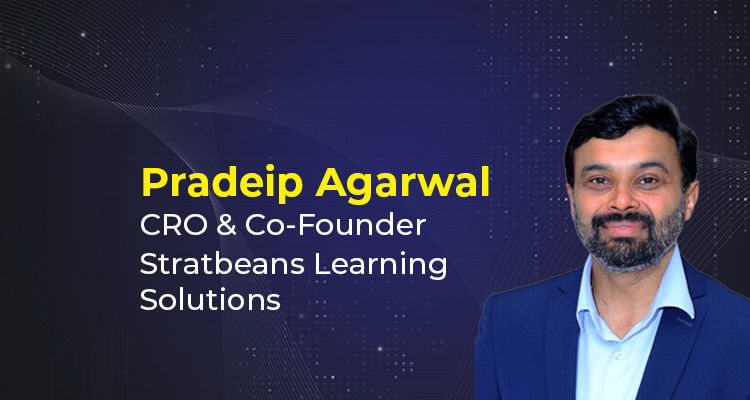
1. Learning and development is undergoing a major transformation with the rise of AI and digital technologies. How do you see the role of corporate learning evolving to meet the demands of the future workforce?
The role of corporate learning is fundamentally shifting from tracking mere training hours to enabling real-time workforce capability prediction. The biggest mistake many organizations still make is equating course completion with workforce readiness. Traditional Learning Management Systems (LMS) relied heavily on static metrics like course completions, which often failed to prove whether a distributed workforce was genuinely prepared to perform. Today, AI-powered Learning Experience Platforms (LXPs) are replacing these outdated models. We are moving toward predictive intelligence where AI analyzes live workforce signals, such as learning behavior, assessment performance, and capability progression, to forecast operational readiness. For the future workforce, learning will no longer be an isolated HR activity but a core driver of business execution. It will be hyper-personalized, dynamically identifying skill gaps and delivering micro-learning interventions exactly when and where they are needed, ensuring that employees are not just trained, but structurally empowered to achieve strategic business outcomes.
2. Organizations invest significantly in employee training, yet measuring business impact remains a challenge. What approaches have you found most effective in linking learning initiatives to tangible business outcomes?
The disconnect happens because most organizations still measure learning activity rather than business capability. To effectively link learning to tangible outcomes, we must transition from “training enablement” to “revenue and productivity enablement.” The most effective approach is to implement AI-driven predictive intelligence dashboards that map individual role competencies and flag team weak links before they impact the bottom line. A sales leader does not care whether 500 employees completed a course. They care whether sales cycles are shortened, conversion rates are improved, or customer satisfaction is increased. Learning must therefore be broken into short, targeted interventions and measured against business outcomes rather than completion statistics. By utilizing Kirkpatrick-based learning frameworks, we can translate daily learning activities into measurable operational insights. This allows business leaders to forecast team operational failures and intervene proactively, ensuring learning directly drives compliance readiness, faster launches, and improved service levels.
3. Immersive technologies such as gamification, simulations, and experiential learning are gaining traction. How can companies leverage these innovations to improve engagement and knowledge retention among employees?
Engagement and retention drop significantly when learning feels like a mandatory administrative task. Immersive technologies disrupt this by embedding learning directly into the flow of work and appealing to intrinsic human motivation. Companies can leverage gamification through multiplayer challenges, interactive leaderboards, and peer-to-peer competitions, which inherently fuel retention by making upskilling a collaborative, engaging experience. Furthermore, simulation-based Standard Operating Procedures (SOPs) allow employees to practice high-stakes scenarios, such as navigating a new software interface or handling a difficult customer, in a risk-free digital environment. This experiential approach can cut new-hire training time by up to 40%. By combining these immersive elements with AI-driven adaptive assessments and mobile-first micro-lessons delivered via agile platforms like WhatsApp, organizations can successfully transform corporate learning from a passive viewing experience into an active, high-retention capability builder.
4. Having worked closely with enterprises across industries, what are the most common skill gaps you see emerging today, and how can organizations proactively address them?
Across complex sectors like automotive, manufacturing, retail, and BFSI, the most critical skill gaps we are seeing involve technological adaptability and rapid compliance execution. The shift to electric vehicles is a good example. Employees who built expertise around mechanical systems are now expected to understand software, electronics, diagnostics, and connected technologies. This requires a completely different learning approach than traditional automotive training. Similarly, frontline agents struggle to keep pace with rapidly evolving digital product portfolios. Organizations can proactively address these gaps by abandoning generic training catalogs and adopting skills-first workforce models. Using AI to map dynamic skill profiles and validate competencies through real-time assessments allows companies to instantly identify precise deficiencies at an individual level. By deploying intelligent LXP ecosystems that deliver hyper-personalized learning pathways, leaders can address these emerging gaps predictively, upskilling the right employee with the exact knowledge required before the gap manifests as a costly operational failure.
5. As workplaces continue to evolve, what changes do you believe businesses need to make in their learning and talent development strategies to build a future-ready workforce?
To build a truly future-ready workforce, businesses must stop treating learning as a standalone support function and deeply integrate it as a strategic business capability. The primary change needed is a cultural and technological shift from visibility into “learning activity” to visibility into “future readiness.” Organizations must deploy predictive learning ecosystems that provide early warnings of skill gaps. Furthermore, talent development strategies must prioritize agility over rigid curriculum planning. Leveraging Generative AI to instantly create adaptive assessments and tailored content ensures that the learning ecosystem evolves precisely as fast as the market demands. Ultimately, building a resilient workforce requires understanding learner psychology, maintaining continuous engagement, and firmly aligning every learning initiative with revenue, productivity, and execution readiness at scale across the entire enterprise.
Enjoyed this interview? Now imagine yours. Write to:
jeevika@thefoundermedia.in