
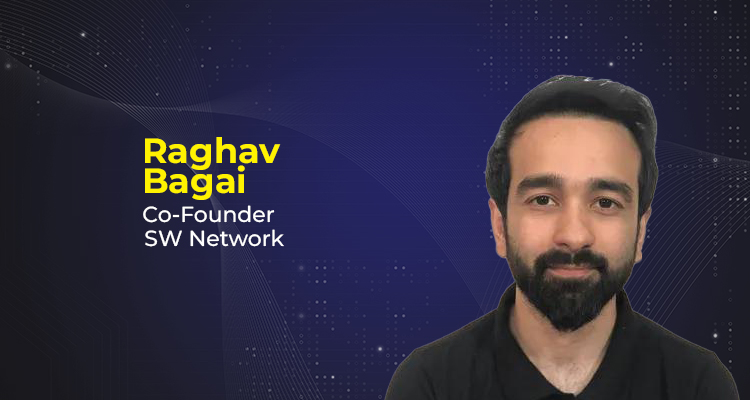
How has SW Network evolved from Sociowash, and what shaped this transformation?
When we started Sociowash, the industry was moving towards specialisation. You had agencies focused on SEO, social media, performance marketing, and so on. But we always believed that brands needed something more holistic.
One of the biggest challenges for a client is getting multiple partners to work together, with everyone accountable for their own piece but nobody necessarily accountable for the final outcome. We wanted to build an organisation that took ownership of the bigger picture. The philosophy was simple: tell us what you want to achieve, and we’ll bring together everything needed to make it happen.
Over the years, we’ve built strong verticals around that philosophy. SW Creative is the heartbeat of the network. Growth Labs focuses on media, SEO, AI optimisation, website development, and growth solutions. SW Studios handles production and visual communication, while Youthbeat brings together creators, offline experiences, and campus activations.
These verticals can work independently, but their real strength lies in how they come together. The evolution from Sociowash to SW Network is essentially about moving from being a social media agency to becoming a more integrated growth partner for brands, with accountability for outcomes at the centre of everything we do.
How can brands balance cultural relevance with measurable business outcomes today?
I would argue that cultural relevance is increasingly becoming a way to drive business outcomes, rather than something that sits separately from them.
When a brand genuinely connects with culture, people are more likely to engage with it, talk about it, share it, and remember it. That can translate into stronger reach and engagement in the short term, improved brand recall and consideration over time, and eventually, an impact on sales.
The key is understanding that cultural relevance isn’t simply about jumping on a trend. It’s about speaking the consumer’s language, showing up in the spaces they care about, and collaborating with creators and communities they already relate to.
You can spend heavily on media and still struggle to create a meaningful connection. But when the message, the moment, and the audience come together, your marketing becomes much more effective.
For us, the question isn’t whether a campaign should be culturally relevant or performance-driven. It’s how you build cultural relevance into the strategy so that it contributes to measurable business results.
How is AI changing creative production, strategy, and performance marketing at SW Network?
AI is fundamentally changing what’s possible in advertising, and we’re actively embracing that shift across creative, strategy, and performance marketing.
One of the most immediate impacts is in production. Work that would previously have required budgets running into crores and timelines of several months can, in certain cases, now be executed for a few lakhs in a matter of days or a week. We’re increasingly able to create CGI-like visuals and complex creative executions that would have been significantly more expensive or difficult to produce in the past.
That doesn’t mean AI replaces the need for human creativity or real-world production. There are categories, particularly luxury, food, and other visually sensitive spaces, where the authenticity of a real shoot remains incredibly important. The opportunity is in knowing where AI can enhance the work, where it can make production more efficient, and where human craft remains indispensable.
Beyond production, AI is opening up possibilities in strategy, optimisation, and performance marketing. We’re looking at it not just as a tool to do existing things faster, but as a way to fundamentally expand what we can offer clients.
Ultimately, the advantage won’t come simply from having access to AI tools. It will come from knowing how to combine those tools with strong creative thinking, strategic understanding, and human judgement.
What should brands do differently to engage today’s younger, creator-driven audiences?
I think brands need to start by thinking more like creators and less like advertisers.
The content that works today has to feel native to the platform it’s appearing on. You can’t simply take a traditional brand communication, cut it into a reel, and expect it to resonate. You have to understand internet culture, the language people use, the formats they enjoy, and the conversations they’re already participating in.
The second thing is finding your own voice. One of the biggest mistakes brands make is seeing something work for another brand and immediately wanting to replicate it. But the internet is full of incredibly specific niches and unexpected interests that attract passionate audiences. There are creators who build entire communities around explaining how things are manufactured, for example. The opportunity is to identify the space that your brand can credibly and distinctively own.
I think brands essentially have two routes. They can use their scale and resources to bring major creators and celebrities into their ecosystem, or they can build a differentiated voice and a community around something only they can talk about in a meaningful way.
Ideally, they should do both. But simply following trends without a clear point of view is unlikely to build lasting relevance. Younger audiences don’t need brands to join every conversation. They need brands to give them a reason to care when they do.
What emerging opportunities do you see for the advertising industry, and how is SW Network preparing for them?
I see a few significant opportunities emerging, and we’re actively building capabilities around them.
The first is AI optimisation. As the way people discover and consume information changes, brands will need to think beyond traditional search and understand how they remain visible and relevant across AI-driven discovery experiences.
The second is the evolution of creator communities. I believe we’re moving beyond the conventional model of selecting influencers primarily on reach. Highly engaged creators operating within specific niches can offer brands much deeper connections with audiences, and there is a significant opportunity to build more sustained relationships with these communities.
Third, I think advertising is approaching a point where the conventional campaign playbook needs to evolve. Certain creative formats and campaign models have been replicated so extensively that brands need to find new ways to stand out. Internet virality, for instance, cannot be treated as a lucky outcome. There’s an opportunity to better understand the cultural triggers, creative formats, and distribution mechanisms that give ideas the potential to travel.
Finally, I believe we’ll see brands invest much more heavily in social-first IPs. Instead of relying entirely on one-off campaigns and always-on hygiene content, brands will increasingly build recurring properties, formats, and communities that audiences actively look forward to engaging with.
At SW Network, we’re preparing for these shifts by investing in AI capabilities, creator ecosystems, integrated production, and IP-led thinking. We want to be positioned not just to respond to where the industry is going, but to help our clients take advantage of those opportunities early.
Enjoyed this interview? Now imagine yours. Write to:
jeevika@thefoundermedia.in