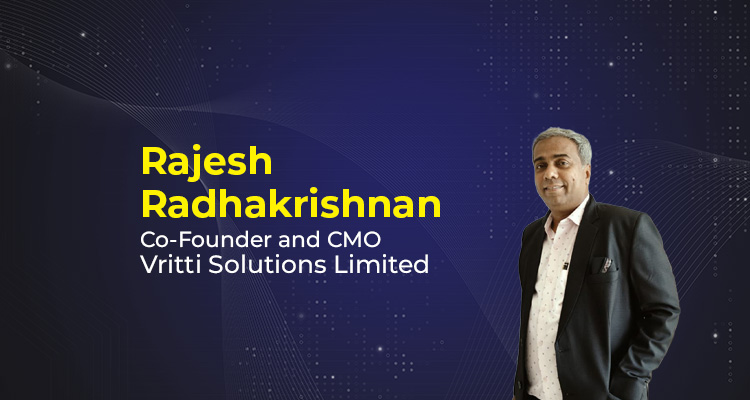
Advertising budgets across India have been steadily reallocating from print and television towards digital and out-of-home formats. From Vritti’s vantage point, how significant has this shift towards Digital OOH actually been, and which categories of advertisers are leading it?
The shift is no longer a future trend: it is the new reality of media planning. Brands today are looking beyond reach alone; they are investing in measurable attention, contextual relevance, and omnichannel visibility. That’s precisely where Digital Out-of-Home has emerged as a strategic medium.
At Vritti iMedia, we have witnessed this transition first-hand. Over the last few years, we’ve seen a marked increase in brands integrating DOOH into their media mix, not merely as an awareness medium but as a critical touchpoint within the consumer journey and especially with our medium, Audiowala Bus Stand, brands have managed to touch rural, semi-rural and emerging metro audiences. The biggest drivers have been FMCG, BFSI, automotive, telecom, healthcare, consumer durables, cement, steel, paints and government awareness campaigns, categories that require scale, frequency, and trust simultaneously.
What makes our network unique is that we don’t compete with print, television or digital, we complement them. Through Audiowala Bus Stand, India’s largest Digital OOH network across more than 630 bus stands in eight states, we connect brands with 2 crore commuters every day, particularly in India’s underserved rural and semi-urban markets where traditional digital penetration is inconsistent but physical mobility remains extremely high.
I believe the next phase of media planning will not be about choosing between digital and OOH. It will be about creating intelligent ecosystems where Digital OOH becomes the bridge between online engagement and real-world consumer behaviour.
Technology in the OOH space is moving quickly, from AI-driven content triggers to sensor-based audience measurement. What specific innovations are Vritti currently piloting or planning to make its Digital OOH network more intelligent and responsive to real-world audience behaviour?
The future of DOOH is not just digital—it is intelligent.
At Vritti, our philosophy has always been to combine infrastructure with technology. Audiowala Bus Stand already operates on a centrally managed digital platform that synchronises passenger announcements, advertising, and information dissemination across hundreds of locations. This enables real-time content scheduling, remote campaign management, and consistent brand delivery across the network.
The next evolution is making the network increasingly data driven. We are actively exploring AI-enabled scheduling, contextual content delivery based on factors such as location, time of day, seasonal relevance, festivals, and commuter behaviour.
This year, we have integrated audience analytics, RFID-based transit data, and intelligent reporting dashboards that provide advertisers with deeper campaign insights rather than just proof of display.
For us, technology should not make advertising more complicated, it should make communication more relevant. The objective is to ensure that the right message reaches the right commuter at the right moment, while maintaining operational efficiency across a geographically diverse network.
Ultimately, we see Digital OOH evolving into a responsive communication platform, with the help of AI, rather than just another advertising screen.
India’s linguistic diversity means a message that works in one state may fall flat in another. What has Vritti learned about customising content by regional language and dialect, and how much of a difference has this made to actual campaign recall and engagement?
One of the biggest misconceptions in national advertising is assuming that one creative fit every market.
India is not a single consumer market but is hundreds of cultural markets coexisting together. Language is only one part of that equation; tone, pronunciation, local references, and cultural context are equally important.
Since Audiowala Bus Stand predominantly serves commuters across rural and semi-urban India, localisation has been central to our strategy from day one. Our announcements and campaigns are delivered in regional languages and, wherever possible, local dialects because passengers instinctively trust communication that sounds familiar and relevant.
We’ve consistently observed that brands adopting regional creative experience stronger audience acceptance than those using generic national messaging. While campaign objectives vary, the common outcome is improved attention because commuters naturally respond to communication that reflects their own linguistic identity.
Localisation is no longer an optional creative adaptation; it has become a business strategy. As India’s consumption growth increasingly comes from Tier II, Tier III, and rural markets, brands that communicate in the consumer’s language will build stronger and longer-lasting relationships.
Experiential and on-ground activations often run in parallel with Digital OOH placements for the same brand campaign. How does Vritti design these two elements to reinforce each other rather than function as separate, disconnected efforts?
The biggest mistake brands make is treating media and activation as separate disciplines. Consumers don’t experience campaigns that way—they experience brands.
At Vritti, we design campaigns as integrated ecosystems. Digital OOH creates sustained awareness and repeated visibility, while on-ground activations convert that awareness into participation and experience. Together, they reinforce each other.
For example, during major pilgrimages, festivals, and rural events, commuters first encounter brand messaging through Audiowala Bus Stand announcements and digital displays before engaging with sampling, product demonstrations, or experiential zones at the venue. This sequential journey significantly improves message continuity and consumer recall. At the current festival Pandharpur, we have encouraged brands to create awareness on our audio network in Maharashtra as well as executed experiential marketing campaigns for them.
Because Vritti offers Digital OOH, BTL activations, experiential marketing, rural outreach, and digital marketing under one integrated ecosystem, brands benefit from unified planning rather than fragmented execution.
The future belongs to connected experiences, where every touchpoint contributes to one coherent brand story instead of functioning in isolation.
Competition in India’s Digital OOH and programmatic advertising space has been intensifying, with new entrants and larger players scaling quickly. How is Vritti positioning itself to stay competitive, and what does the company see as its long-term moat in this market?
Competition validates the opportunity. The Digital OOH industry is expanding rapidly because brands increasingly recognise its effectiveness. However, scale alone does not create differentiation.
Our biggest competitive advantage is that we built a network others often overlook which is the vast rural and semi-urban transit ecosystem of India.
Audiowala Bus Stand is not simply a collection of digital screens. It is a public utility platform where nearly 70 per cent of the communication consists of passenger information and public announcements, while advertising is seamlessly integrated into that experience. This creates an environment where commuters actively pay attention rather than avoid the message.
Our long-term moat rests on four pillars:
- Unique infrastructure: Built over years through long-standing partnerships with State Transport authorities.
- Deep rural and semi-urban market penetration: An audience that remains significantly under-served by conventional digital media.
- Technology-led operations: Enabling centralised content management, scalable campaign execution, and continuous innovation.
- Integrated marketing capabilities: Combining Digital OOH, rural activations, experiential marketing, transit media, and digital solutions within a single ecosystem.
The next decade of Indian advertising will not be defined only by bigger cities but will be defined by deeper markets. Our vision is to ensure that brands can communicate with every Indian consumer, irrespective of geography, language, or digital access. That, in my view, is where sustainable leadership in Digital OOH will be built.
Enjoyed this interview? Now imagine yours. Write to:
editor@thefoundermedia.com