
Client confidentiality is now being raised in pitch rooms, not just contracts as clients want to know which AI tools are used and where their data goes. What’s behind this shift, and how should agencies handle data governance in this new environment?
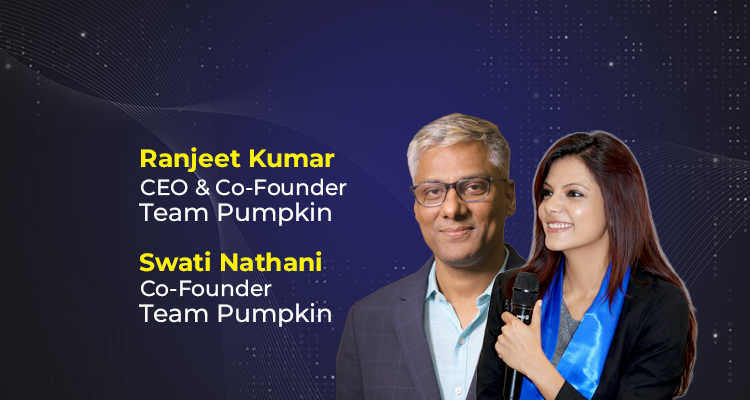
Swati Nathani: The real shift is in where this conversation now happens. Confidentiality used to live in clause fourteen of an agreement that nobody read again after signing. This year clients started asking us in the pitch room itself which tools we use, whether their data trains anything, and where it sits. Some of them ask sharper questions than our own legal team does. I think that is a healthy change, but it does mean confidentiality has become something you have to explain out loud in a meeting, and not just something you sign.
Ranjeet Kumar: As agencies become more AI-enabled, data governance has become a boardroom conversation rather than just an IT concern. Every AI tool needs to be evaluated through the lens of security, compliance and client confidentiality. Innovation is important, but protecting client information is what sustains long-term business relationships. Trust remains the most valuable asset any agency has.
As AI platforms become discovery engines shaping how consumers choose brands, most companies are still tracking only traditional SEO. Why does AI visibility now matter just as much, and what are brands risking by ignoring it?
Swati Nathani: I have been building a few AI agents on the side, and what I did not expect was how little these models care about your own website. They pull from what other people have written about you. So, all the PR you did without expecting any search value from it is doing search work now, and most brands are still budgeting for the two as if they have nothing to do with each other. My advice to founders is simpler than any dashboard. Open ChatGPT, ask it to recommend a brand in your category, and see whether you show up. Most people have never checked, and the answer usually stings.
Ranjeet Kumar: Search behaviour is changing faster than most businesses realise. AI platforms are becoming discovery engines, influencing how consumers evaluate products and services. Brands that continue measuring only traditional SEO may miss an important part of their digital presence. AI visibility will soon become another critical business metric alongside search rankings and share of voice.
“Search Engineering” is being used to describe content, PR and technical SEO teams working together for the first time. Is this a genuine new discipline, or is it easier to sell in a proposal than to actually implement?
Swati Nathani: I would be a little careful with the phrase. A lot of what is being sold as search engineering is content, PR and technical SEO being asked to sit in one room for the first time. Those teams were built separately, they report separately, they are measured on completely different things, and AI discovery does not care about any of that. I will admit that it is far easier for an agency, mine included, to add a new line to a proposal than to change how a team is staffed. That is the part nobody says on stage. The clients seeing real movement have bought a change in how the work gets done.
Ranjeet Kumar: Search engineering combines technology, structured information, content strategy and digital authority. It’s no longer about optimising individual pages; it’s about building an ecosystem that AI can understand and trust. Businesses that invest early in this transition will have a significant advantage as AI increasingly shapes online discovery.
Many 3D billboards today are designed to go viral as social media clips rather than be seen in person, and some are never even physically installed. How should the industry measure real success for these campaigns, and where should the line be drawn between outdoor and digital creative?
Swati Nathani: Very few people actually stand at the junction and look up. They see it as a fifteen second video on their phone, usually shot by somebody else. So, when a client asks me whether a 3D billboard worked, I want to look at the video and the edit and how far it travelled, because that is the real deliverable. I will also say something that is not very popular. A fair number of the 3D executions doing the rounds in India were never installed anywhere. They were rendered and uploaded. As a creative call I have no problem with it, but we should stop filing it under outdoor.
Ranjeet Kumar: Technology has expanded what’s possible in outdoor advertising, but effectiveness still depends on strategy. A 3D installation should create meaningful engagement rather than simply visual novelty. The brands seeing the greatest success are those integrating experiential outdoor formats into a broader omnichannel marketing journey.
DOOH has long promised dynamic, contextual creative, but most campaigns still run one static ad for weeks. What’s really holding the medium back, is it the technology, production capacity, or how it’s briefed and bought?
Swati Nathani: Every DOOH presentation I have sat through promises creative that changes with weather, location and time of day. Then the campaign goes live and one creative run for six weeks. The technology has been ready for years. What is missing is that no creative team is staffed to produce forty versions of an asset for a medium the client is still evaluating on impressions. Till the brief and the budget change, we will keep selling DOOH as a smart screen and buying it as a big poster.
Ranjeet Kumar: Digital Out-of-Home is becoming a performance-driven medium. The ability to update creatives instantly, optimise messaging and use real-time contextual triggers makes DOOH much smarter than traditional outdoor advertising. As data capabilities improve, brands will increasingly treat it as an agile digital channel rather than a static branding asset.