
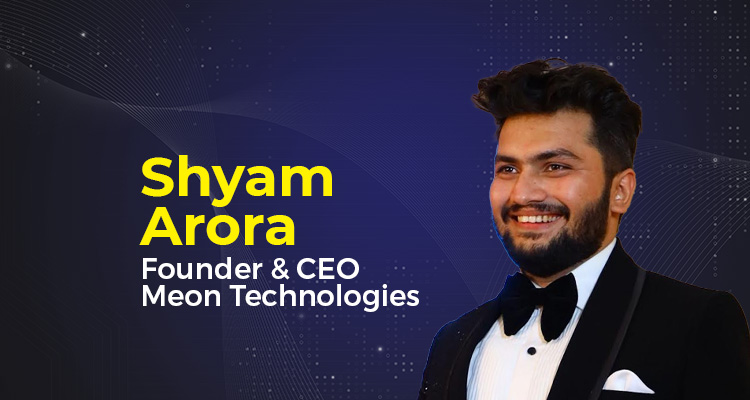
There is a quiet, but paradigm shift ongoing in the way Indian enterprises onboard customers, verify identities, and demonstrate regulatory compliance. It does not announce itself with fanfare. It arrives in the form of a KYC drop-off rate that finally crosses the acceptable threshold, a compliance audit that consumes weeks instead of hours, or a customer who simply closes the tab because they were asked to visit a branch. And then, one morning, it arrives all at once.
I have spent years building technology at the digital identity landscape, compliance, and enterprise operations. What I have observed is unambiguous: organisations that modernise their verification infrastructure today will define the competitive benchmarks of the next decade. Those that do not will be structurally unable to compete in an economy where trust is instantaneous and friction is fatal.
The problem enterprises are refusing to acknowledge
Manual KYC processes are not merely inefficient; they are architecturally broken for the digital economy. Conventional verification processes built on physical documents, IPV, and inconsistent data records create high hidden costs for banks, insurers, NBFCs, and telecom providers. Manual KYC onboarding can cost between Rs 300 and Rs 1,500 per customer. Over expenses, organizations face customer drop-offs, incomplete fraud monitoring, and compliance risks that can lead to costly regulatory penalties.
When RBI introduced Video KYC in 2020, many organizations viewed it as a crisis-driven solution. Today, it helps them to speed up onboarding, boost fraud detection, and improve customer experience.
With immediate document verification, liveness detection, and face matching, customers can complete verification from anywhere in minutes. What once required branch visits and days of processing can now be completed in under seven minutes. As a result, enterprises are seeing higher onboarding completion rates and significantly improved fraud detection accuracy.
DigiLocker: The infrastructure layer that changes everything
If Video KYC is the interface layer of this revolution, DigiLocker is its foundational infrastructure, and it remains dramatically underutilised by enterprise India. With over 700 crore documents hosted across 600 registered issuing organisations, DigiLocker is a verified, tamper-proof repository accessible with user consent in milliseconds. An NBFC can retrieve a borrower’s ITR, Aadhaar, PAN, and vehicle registration in a single API call with the same legal standing as physical originals. An insurance company can accelerate claims by pulling verified documents directly from the issuer, eliminating forgery risk inherent in self-submitted files. Regulators increasingly accept DigiLocker-sourced documents as primary evidence, audit cycles shrink, legal exposure diminishes, and the enterprise’s compliance posture improves fundamentally rather than cosmetically.
“Video KYC and DigiLocker together do not simply accelerate onboarding. They restructure the entire risk architecture of customer acquisition, making enterprises simultaneously faster, safer, and significantly more cost-efficient.”
How Meon Technologies makes it real
Understanding technology is one thing. Deploying it reliably at enterprise scale is another entirely. This is precisely the gap Meon Technologies was built to close. Our API-first platform integrates Video KYC, DigiLocker document fetching, OCR, and automated compliance checks into a unified workflow that goes live in minutes. We serve banks, NBFCs, insurance, and fintech platforms that cannot afford verification downtime.
What Meon Technologies delivers for enterprises
- Live Video KYC with AI liveness detection and facial biometric matching
- One-click DigiLocker document fetching via consent-based API
- Real-time CKYC, risk assessment checks for risk scoring
- Audit-ready session recording and tamper-proof compliance archives
- RBI, IRDAI & SEBI-compliant workflows
- White-label SDK for seamless enterprise and fintech integration
Enterprises running Meon’s platform have reduced per-verification costs by up to 70 percent, reclaimed thousands of compliance hours annually, and most importantly, converted more customers by eliminating the friction that was silently killing their funnels. A new insurance applicant can be fully verified, risk-scored, and onboarded in under ten minutes. Zero paper. Zero branch visit. Full regulatory compliance.
The next 3–5 years: What leaders must anticipate
The Account Aggregator framework will mature into a universal data-sharing protocol; combined with DigiLocker and Video KYC, it will create unified identity and financial profiles that make today’s onboarding look archaic. AI-driven perpetual KYC will replace point-in-time verification as the regulatory expectation for high-risk financial services. And regulators will progressively raise the compliance floor, making digital verification legally mandatory across a broader range of enterprise categories. Enterprises that build this infrastructure now will hold a structural head start that competitors who wait for compulsion will never recover.
“The leaders who will shape the next decade of Indian enterprise are not those asking whether digital identity transformation is necessary; that question has been answered by the market, the regulator, and the customer alike. The question is whether you move with conviction and build the infrastructure that earns trust at scale or wait until the window has closed. At Meon Technologies, we are not waiting. We are building the rails on which India’s digital economy will run, and we invite every forward-thinking enterprise leader to join us on that journey.”
Share your exclusive thoughts to:
editor@thefoundermedia.com