
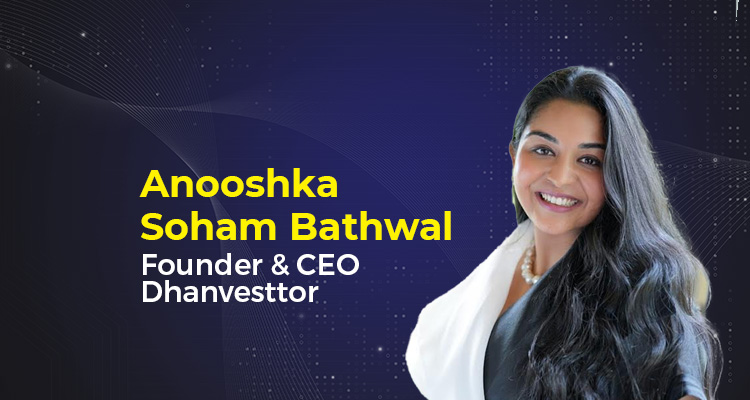
Dhanvesttor’s vision is to develop women into “finance-confident individuals.” How do financial confidence and financial literacy differ, and why does that distinction matter?
Financial literacy is knowing. Financial confidence is doing. And that gap between knowing and doing is where most women get stuck.
I have met women who can tell you exactly what a SIP is, who understand the difference between equity and debt, who have read every article on personal finance. And yet, they still hand over all money decisions to a spouse, a father, or a brother. That is a literacy problem that became a confidence problem. The knowledge was there; the permission to act on it was not.
Literacy gives you the blueprint, and confidence means you are willing to actually drive. At Dhanvesttor, our work does not stop at explaining financial instruments. We ask: what is making you hesitate? Is it fear of making a wrong move? Is it the belief that you are not “the finance person” in your family? Is it imposter syndrome in boardrooms and broker offices? We actually address those layers, because a woman who can ask sharp questions in a client meeting, negotiate her own salary, and build her own retirement corpus, is someone who does not need to be protected from financial decisions. She needs to be trusted with them.
How do you balance a client’s long-term growth objectives with their near-term liquidity needs in a portfolio?
This is, honestly, the most human challenge in wealth management. Every client comes to us with two versions of themselves: the future self who wants to retire comfortably, and the present self who may need funds in six months for a child’s education, a medical expense, or a business pivot. Our job is to honour both.
So the first conversation is always about slowing down the word ‘urgent.’ Half of the time, a need that feels like it’s coming tomorrow actually has a six-month window, sometimes more. Once that’s clear, we set aside enough in liquid funds or short-duration instruments to genuinely cover the next twelve to eighteen months. No guessing, no optimism. That bucket stays put. Everything else can go into equities, structured products, whatever fits the growth mandate, and it can actually stay there.
In my experience, people rarely lose money because they chose a bad instrument. They lost it because life happened, and they had no choice but to sell at exactly the wrong time. Avoiding that moment is most of what good portfolio construction is actually about. Once a client sees that their near-term needs are genuinely covered, something shifts. They stop reacting to every market headline. That’s how I know the structure is working.
What are the most common financial misconceptions you’ve noticed among women investors, and how would you address them?
Three come up again and again.
The first one is this idea that saving is the cautious choice and investing is the gamble. And I want to be clear, women are generally very thoughtful about risk. They analyse, they ask questions, they don’t jump into decisions without thinking them through. That instinct is actually an asset in investing. The problem is when that same caution keeps them entirely on the sidelines. A savings account earning four percent while inflation quietly runs at six is not safety; it’s losing ground every single year without a single bad market day. The risk of inaction is just as real. It just doesn’t announce itself.
Second is the waiting game. “I’ll get started once my income goes up” or “once things settle down.” Compounding does not care about the size of your first investment. It cares about time. I’ve run these numbers more times than I can count: a woman putting away two thousand rupees a month from age twenty-five will quietly outpace someone who starts at thirty-five with five times that. The gap isn’t the amount. It’s the years.
The third is perhaps the most important one to dismantle: “This finance stuff isn’t really my domain.” That belief didn’t come out of nowhere; it got handed down. Families, schools, and workplaces all quietly reinforce the idea that money decisions belong to someone else, usually a man with a spreadsheet. It is false. And it costs women enormously over a lifetime. The way we address it isn’t by watering things down; it’s by walking through the logic together until the client actually understands it. Because once you see why a decision makes sense, it becomes yours. That shift is everything.
How does SEBI’s PMS framework differ from the regulatory requirements for a mutual fund distributor?
The two sit in quite different regulatory worlds. A Portfolio Management Services licence under SEBI’s PMS Regulations asks for a minimum net worth of five crore rupees, along with a dedicated fund manager. The client entry point is fifty lakh rupees, and the whole model is built around discretionary management, meaning the portfolio manager is making actual investment calls on the client’s behalf, within a mandate they’ve agreed to together.
Mutual fund distribution works differently. A distributor operates under AMFI registration within SEBI’s conduct framework, and the role is fundamentally about connecting clients to standardised schemes that already exist. There’s no discretionary authority. The distributor doesn’t determine what goes into the portfolio. The AMC does that. It’s a wider, more accessible model, and intentionally so.
The key distinction is one of customisation and accountability. PMS involves a direct, individualised investment relationship with tailored strategies. Distribution is broader, more accessible, and product-led. Both have legitimate roles; the right fit depends on the client’s asset size, goals, and how actively they want their wealth to be managed.
What digital tools or fintech integrations do you think a boutique wealth management firm like Dhanvesttor should prioritize to stay competitive?
Honestly, firms that use technology to deepen relationships, rather than replacing them, are more likely to be sustainable. And that is what we truly believe in.
Three priorities stand out. First, a robust relationship with financial planning integration. Knowing a client’s full picture, such as their assets, liabilities, goals, risk profile, and major life events in one place, allows us to give advice that is actually tailored to their life, not generic recommendations. Second, digital onboarding and reporting are only done in mutual fund distribution. Clients today expect clean dashboards, consolidated portfolio views, and real-time access. Clunky onboarding is a trust signal, in the wrong direction. Lastly, communication and financial education tools. We invest meaningfully in content and community, like webinars, explainers, and community forums for women investors. That is a fintech investment too, just one measured in engagement and trust rather than AUM alone.
What I’d caution against is chasing every new tool just because it exists. Before anything goes near a client or their data, it has to hold up against SEBI’s compliance framework, and that’s non-negotiable in a regulated space like ours. And beyond compliance, the question is simpler: does this actually solve a real friction point for the client? If it doesn’t, it’s just overhead. For a boutique firm, focus and depth will always beat breadth.
Enjoyed this interview? Now imagine yours. Write to:
editor@thefoundermedia.com