
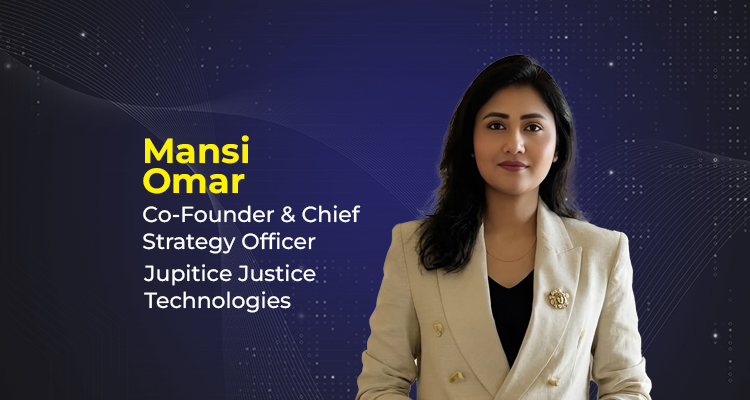
Jupitice Justice calls itself the world’s first “Meta Product Platform” for justice delivery, built without custom code per client. What does that mean operationally, and why does this architecture matter more here than in typical enterprise SaaS?
Most enterprise SaaS is built once and configured lightly for each buyer. Justice cannot work that way: no two courts, tribunals or regulators share a procedure, and each changes its rules through amendments no software vendor can predict.
Operationally, we separate the logic of a justice process, the forms, timelines, roles, escalation rules, from the underlying software, so institutions configure and adjust it visually instead of filing a change request with a developer. That is how the same platform has scaled to 180+ institutions and 23 million case journeys since 2019 without a rewritten codebase.
India already knows what verifiable digital infrastructure does at scale: identity through Aadhaar, payments through UPI. Justice has lacked its equivalent, because every institution’s process has been treated as a one-off build. We designed our architecture, with audit trails and access control built in, to be that missing layer.
Justice systems deal with sensitive data and high-stakes decisions. How does Jupitice approach AI explainability and human oversight so automation doesn’t compromise due process or institutional trust?
We draw a hard line between assisting a process and making a determination. Our AI drafts, summarises, flags inconsistencies and surfaces precedent, but it does not issue orders or rulings. Every output carries a visible trail back to its source, and a judge, registrar or case officer reviews it before it enters the record.
We call this discipline our Trust Layer: quality checks and audit logging built in before any AI feature ships, not bolted on after. Automation does the most in steps furthest from judgment, like scheduling and document intake, and the least where discretion and accountability matter most. Trust in a justice system is earned procedurally, not delegated to a model.
How do you see AI’s role evolving, from digitising case files and workflows today to shaping faster, fairer outcomes tomorrow?
Today, AI’s role is largely operational: digitising records, auto-populating filings, routing cases, catching missing documents before they cause delay.
The next phase is about consistency, not speed. Benches interpret the same rule differently, similar cases get listed at different paces. AI can surface those variances so institutions can correct them, rather than deciding cases itself, flagging a matter out of line with comparable ones, not ruling on it.
Fairness here is not a single output. It is the compounding effect of a process that stays visible, consistent and accountable at every stage, a multi-year institutional shift, not a feature release.
Legal and judicial institutions are known for resisting changes to established process. What’s been the hardest resistance Jupitice has faced while scaling, and how did you address it?
The resistance was rarely about technology. It came from staff who had informally managed process gaps for years, adjourning matters without a recorded reason, tracking files manually, worried a digital system would expose those gaps rather than fix them.
We refused to lead with replacement. We configure the system to match an institution’s existing rules first, visible and adjustable by its own registrars and officers, not our developers, and introduce efficiency changes only once that trust is established. Ownership of the workflow is what converts resistance into adoption: people who build a system themselves defend it instead of routing around it.
The ADR Marketplace connects justice seekers directly with arbitrators and mediators globally. How do you see AI changing that matching and discovery process over the next few years?
Matching today runs largely on structured filters: expertise, jurisdiction, language, fee, sector. That solves discovery, not fit. Over the next few years, it will shift toward case-pattern and outcome data, which neutrals have handled similar disputes, at what pace, with what outcomes, alongside real conflict-of-interest screening instead of manual disclosure forms.
What we guard most is transparency of the matching logic itself. A marketplace holds trust only if parties understand why a neutral was suggested and retain real choice, not an opaque recommendation. The shift is not automation for its own sake; it is matching becoming better informed while staying auditable and optional.
How does Jupitice navigate the regulatory and procurement complexities of working with government and judicial bodies, which move slower than typical enterprise sales cycles?
We stopped treating government and judicial procurement like enterprise sales long ago. These cycles are structurally slower, security clearances, data residency, legacy systems that cannot simply be switched off, and that is the operating environment, not a barrier to design around.
We build compliance and audit-readiness into the product by default, so a security or procedural review does not stall a rollout for months. We also avoid pitching a single, full-scale replacement: institutions start with one module, litigation management, e-stamping, a dispute resolution workflow, and expand once it proves itself. It is a longer path, but the only one that survives how public institutions actually decide.