
Samsung’s Chennai manufacturing plant has become part of a broader industrial ecosystem in Sriperumbudur, Tamil Nadu, where the expansion of manufacturing, housing and employment is creating new opportunities for small businesses serving the growing local population.
Samsung established its Chennai manufacturing facility in Sriperumbudur in 2007. Since then, the area has developed into a significant manufacturing hub, accompanied by the growth of residential communities, supporting businesses and services catering to workers and families.
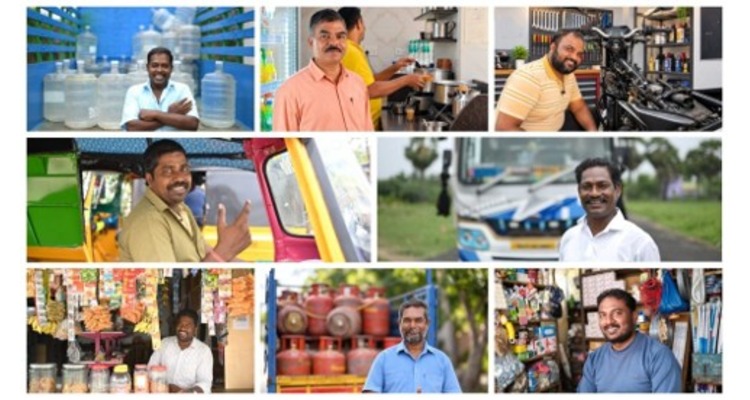
For local entrepreneurs, the change is reflected in the steady increase in customers and the expansion of businesses that serve everyday needs. Tea shops, grocery and hardware stores, water suppliers, mechanics, LPG distributors and transport operators have all found opportunities as economic activity around the industrial corridor has increased.
Rajan, who has run a tea shop in Sriperumbudur for nearly three decades, has witnessed the transformation first-hand. He recalled that when he started, the surrounding area had fewer residents and a smaller customer base. The emergence of more companies, agencies, housing developments and a larger working population has since changed the scale of demand for local businesses.
A similar shift has been visible in retail. Sathish Kumar, who operates an electrical and hardware store, said demand for everyday products has increased as more workers and families have settled in the area.
For Santhosh, the growth of the local population has transformed his grocery store from a neighbourhood outlet into a business serving a much larger community, including employees working at nearby companies. Rising demand has also encouraged him to broaden his inventory and introduce delivery services.
The impact of industrial growth extends beyond retail businesses. As residential settlements expand, demand for essential services such as drinking water, cooking gas, vehicle maintenance and transportation has also increased.
Mastaan, who runs a drinking-water supply business, said the development of housing settlements linked to industrial activity has increased demand for larger-volume water supplies. Local LPG distribution and delivery businesses have similarly benefited from the rising number of households, while automobile repair workshops are serving a growing number of vehicles moving through the area.
Transportation has emerged as another important part of the local economy. Govindaraj, a long-time Sriperumbudur resident and bus operator, said the changing population and employment landscape has increased the need for services connecting residential areas with workplaces and schools.
Autorickshaw driver Manikandan has experienced a similar increase in movement, with growing industrial and commercial activity generating more passengers and greater demand for local mobility.
The experiences of these entrepreneurs illustrate how the economic footprint of a manufacturing hub can extend beyond the boundaries of its factories. Employment generated within industrial facilities can contribute to demand for a wider network of businesses providing food, household products, mobility, repairs and essential services.
In Sriperumbudur, this network is visible in the businesses that have grown alongside the area’s industrial development: from tea shops and grocery stores to mechanics, water suppliers, transport operators and other service providers.
Nearly two decades after Samsung began manufacturing in Sriperumbudur, its Chennai plant sits within a much broader industrial and community ecosystem. The area’s development demonstrates how the growth of manufacturing can influence not only factory employment but also the everyday commercial activity supporting the communities around it.
Send news announcements/press releases to:
jeevika@thefoundermedia.in